
Bangladesh Faces a New Border Crisis as Dhaka Rejects Returnees Amid India’s Illegal Migration Crackdown
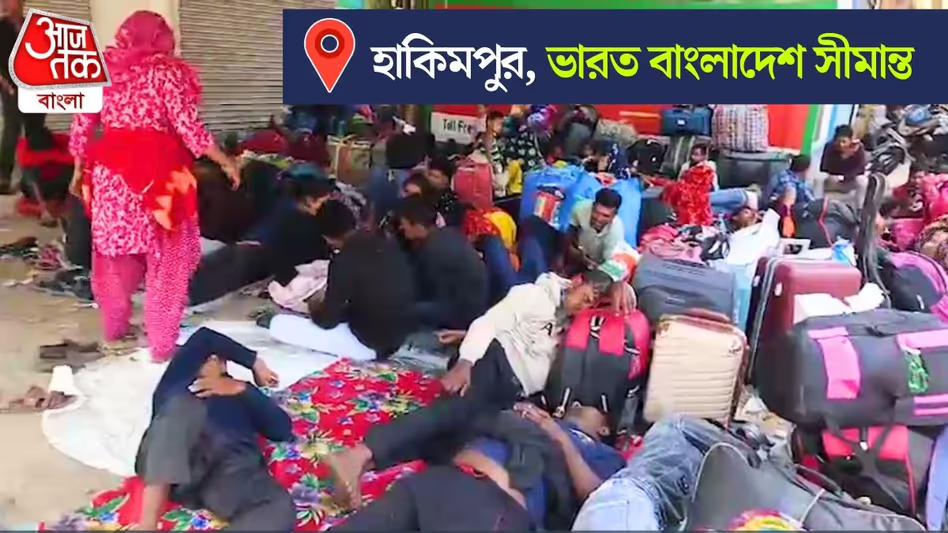
A humanitarian and diplomatic standoff is unfolding along the India-Bangladesh border, where thousands of people claiming to be Bangladeshi citizens have reportedly gathered at multiple crossing points seeking to return to Bangladesh.
From Hakimpur and Haridaspur to Ghojadanga, border areas have witnessed an unusual influx of men, women and children enduring extreme heat while waiting for permission to cross into Bangladesh. According to accounts gathered by journalists on the ground, many openly acknowledge that they had been living in the Indian state of West Bengal without legal immigration status.
When asked about their origins, individuals reportedly identified districts such as Satkhira, Khulna, Barishal, Chattogram and Cumilla as their hometowns in Bangladesh. Asked where they had been living in India, responses ranged from Barrackpore, Dum Dum and Barasat to Sonarpur and Baruipur.
Many described working in construction, agriculture, vegetable trading and marble installation, while women commonly reported employment as domestic workers. Several stated that they had lived in India for periods ranging from four to ten years after entering through irregular routes.
Many cited growing concerns over immigration enforcement and the changing political climate in India as reasons for deciding to leave voluntarily. According to their accounts, they feared detention and possible imprisonment if discovered by authorities.
Most of those interviewed reportedly possessed Bangladeshi National Identity Cards or birth certificates but did not hold passports. Their inability to provide regular travel documentation has further complicated efforts to establish their legal status and facilitate their return.
A Growing Humanitarian Challenge
Reports suggest that thousands of individuals have accumulated near border gates during the past week. Indian authorities and border security personnel have reportedly arranged temporary accommodation, food and drinking water in holding facilities while awaiting a resolution.
In several cases, individuals have reportedly remained stranded in or near no-man’s land after Bangladesh border authorities declined to open crossing points.
The situation has raised concerns about the emergence of a refugee-like humanitarian crisis, despite the fact that many of those gathered insist they are attempting to return to their country of origin rather than seeking asylum elsewhere.
Dhaka’s Position
Bangladesh maintains that it will not accept any individual without formal nationality verification through established legal procedures.
Officials in Dhaka argue that nationality cannot be determined solely on the basis of claims made at the border and have expressed concerns that some individuals presented as Bangladeshis could in fact be Indian nationals.
The Bangladeshi government has repeatedly stated that any repatriation process must be conducted jointly, with proper verification and legal documentation. Authorities have also objected to what they describe as unilateral attempts to transfer undocumented individuals across the border.
Bangladesh has reportedly communicated this position to Indian authorities through diplomatic channels and has reiterated its opposition to any form of forced transfer.
India’s Frustration Over Verification Delays
Indian officials, however, have long complained about delays in receiving confirmation from Bangladesh regarding the nationality of detained individuals suspected of being Bangladeshi citizens.
According to statements made by India’s Ministry of External Affairs, verification requests in some cases have remained unresolved for years, complicating deportation and repatriation procedures.
The disagreement highlights a longstanding challenge in India-Bangladesh migration management: how to identify, verify and repatriate undocumented migrants while respecting legal procedures and human rights obligations.
A Test for Bilateral Relations
The current standoff presents a significant test for both governments.
For India, the issue concerns the enforcement of immigration laws and the repatriation of undocumented migrants. For Bangladesh, the concern is ensuring that only verified citizens are accepted through a lawful process.
Yet beyond the diplomatic dispute lies a pressing humanitarian question: what happens to thousands of people who claim Bangladeshi citizenship, wish to return to Bangladesh, but find themselves unable to cross the border?
Until a mutually agreed verification mechanism is implemented more efficiently, the border risks becoming the stage for a prolonged humanitarian crisis—one that could further strain relations between two neighbours whose cooperation remains critical to regional stability and migration management.