
Nearly 70,000 Cross Ceuta Border: Humanitarian Tragedy Exposes Fragility of Europe’s Migration Policy
PolicyGov UK | Migration & Human Rights Monitoring
Source: This report is based on information published by The Guardian, Reuters, and official statements from Spanish and European Union authorities. It has been prepared by PolicyGov UK for research and policy analysis purposes.
A Mass Border Crossing Raises Serious Human Rights and Security Concerns
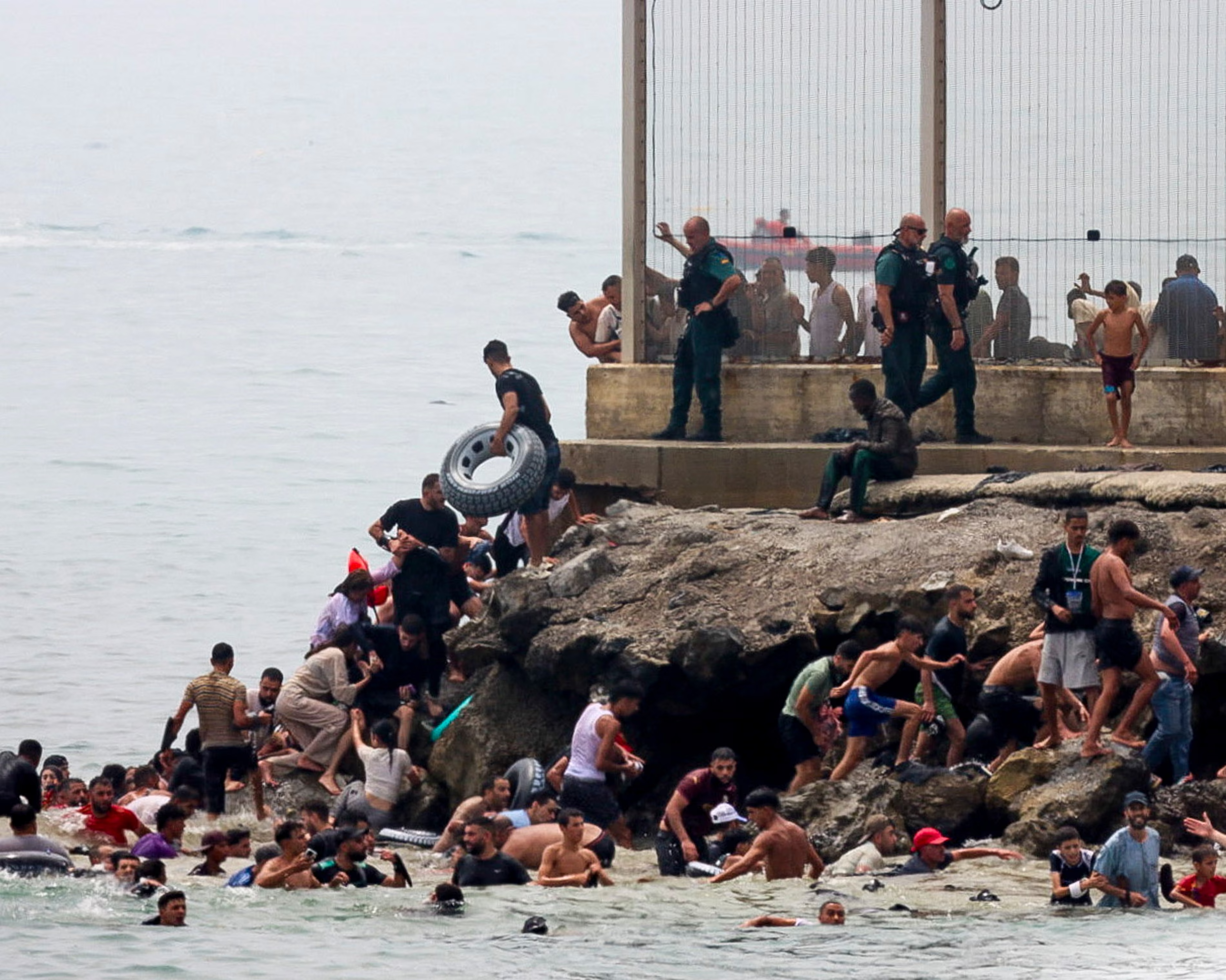
The arrival of nearly 70,000 migrants into the Spanish enclave of Ceuta from Morocco within a matter of days has triggered one of Europe's most significant border crises in recent years, exposing critical weaknesses in migration governance, humanitarian protection, and EU external border management.
Spanish authorities estimate that approximately 69,500 people crossed into Ceuta before the majority were later returned to Morocco. Around 2,500 migrants remained in the enclave, while reports indicated that 88 people lost their lives, with concerns that the actual death toll could be higher.
The incident has generated widespread debate over responsibility for the tragedy, the protection of migrants' rights, and the future direction of European migration policy.
Spain Suggests Moroccan Authorities Failed to Prevent the Crossing
The President of Ceuta, Juan Jesús Vivas, described the events as "an atrocity", arguing that the unprecedented movement of people appeared to have been "if not orchestrated, at least encouraged or permitted" by Moroccan authorities.
Spain's Defence Minister Margarita Robles called on Morocco to conduct a full investigation into the events, while preliminary assessments by Spanish intelligence reportedly suggested that Moroccan border controls were significantly reduced during the period of the crossings, allowing thousands of people to reach the border.
Although no official finding has concluded that Morocco deliberately organised the influx, Spanish officials have raised questions regarding Rabat's management of the border during the crisis.
Disinformation and Legal Confusion Fuelled the Crisis
Spanish intelligence officials reportedly believe that the immediate trigger for the mass movement was misinformation circulating on social media following a ruling by Spain's Supreme Court concerning migrants intercepted at sea.
False claims suggesting that the Ceuta border had effectively opened spread rapidly online, encouraging thousands of people—including children—to attempt dangerous sea crossings.
The episode highlights the increasing role of digital misinformation in shaping irregular migration movements and the growing challenge facing governments in responding rapidly to false information during migration emergencies.
Humanitarian Impact: Deaths, Missing Children and Unaccompanied Minors
Beyond the political dispute, the humanitarian consequences have been severe.
Witnesses described chaotic scenes in which migrants swam through dangerous waters, with survivors reporting seeing bodies in the sea during the crossing. Families have also reported children missing after attempting to reach Ceuta.
Local authorities stated that more than 860 unaccompanied minors remained in the enclave following the incident, raising urgent child protection concerns under international humanitarian and refugee protection standards.
The scale of fatalities and the involvement of children have renewed calls from human rights organisations for stronger safeguards during border management operations.
European Union Faces Renewed Pressure Over Migration Governance
The crisis quickly evolved into a broader European political dispute.
Several EU member states criticised Spain's handling of the situation, while Madrid argued that the crisis required European solidarity rather than unilateral criticism.
European Commission President Ursula von der Leyen expressed support for Spain's response while stating that the incident demonstrated the need to further strengthen the EU's external borders and improve crisis preparedness.
EU interior ministers subsequently convened emergency discussions to assess the situation and consider lessons for future migration management.
Migration Cooperation with Morocco Remains Strategically Important
Despite political tensions, Spanish officials acknowledged that long-term migration management depends heavily on continued cooperation with Morocco.
Spain's Foreign Minister emphasised that effective border control, migrant returns, and regional security require sustained bilateral engagement between Madrid and Rabat.
The episode illustrates the broader dependence of European migration policy on cooperation with neighbouring transit countries, particularly Morocco, Tunisia, Libya and Turkey.
Concerns Over Foreign Disinformation
European officials also warned that the crisis was accompanied by coordinated online disinformation campaigns.
According to statements referenced by European officials, pro-Russian information networks were identified as amplifying misleading narratives surrounding the Ceuta events in an apparent attempt to increase political tensions inside the European Union.
The incident demonstrates how migration crises are increasingly vulnerable to information warfare alongside humanitarian and security challenges.
Policy Implications
The Ceuta crisis raises several important policy questions for European governments and international organisations:
- Balancing border security with international human rights obligations.
- Protecting children and vulnerable migrants during mass border incidents.
- Strengthening mechanisms to combat migration-related misinformation.
- Enhancing cooperation between the EU and neighbouring transit countries while ensuring accountability.
- Developing coordinated European responses to sudden large-scale migration emergencies rather than fragmented national approaches.
PolicyGov UK Assessment
The events in Ceuta demonstrate that migration crises are no longer solely border management challenges; they increasingly combine humanitarian protection, geopolitical competition, digital misinformation, and regional diplomacy.
The reported deaths, the presence of hundreds of unaccompanied children, and allegations regarding weakened border controls underscore the importance of transparent investigations and accountability consistent with international human rights standards.
For European policymakers, the Ceuta incident also reinforces the need for a balanced migration framework that safeguards human dignity while maintaining effective and cooperative border governance.
Sources: The Guardian (reporting by Sam Jones and Ashifa Kassam), Reuters, statements from the Government of Spain, the European Commission, and publicly reported remarks by EU officials.